
Denver and its printmakers

Mid-March 2026 brought us to Denver for a visit that reminded us why this city holds such a special place in the American print world. We came away with full notebooks and even fuller heads, and this is our account of what we found.
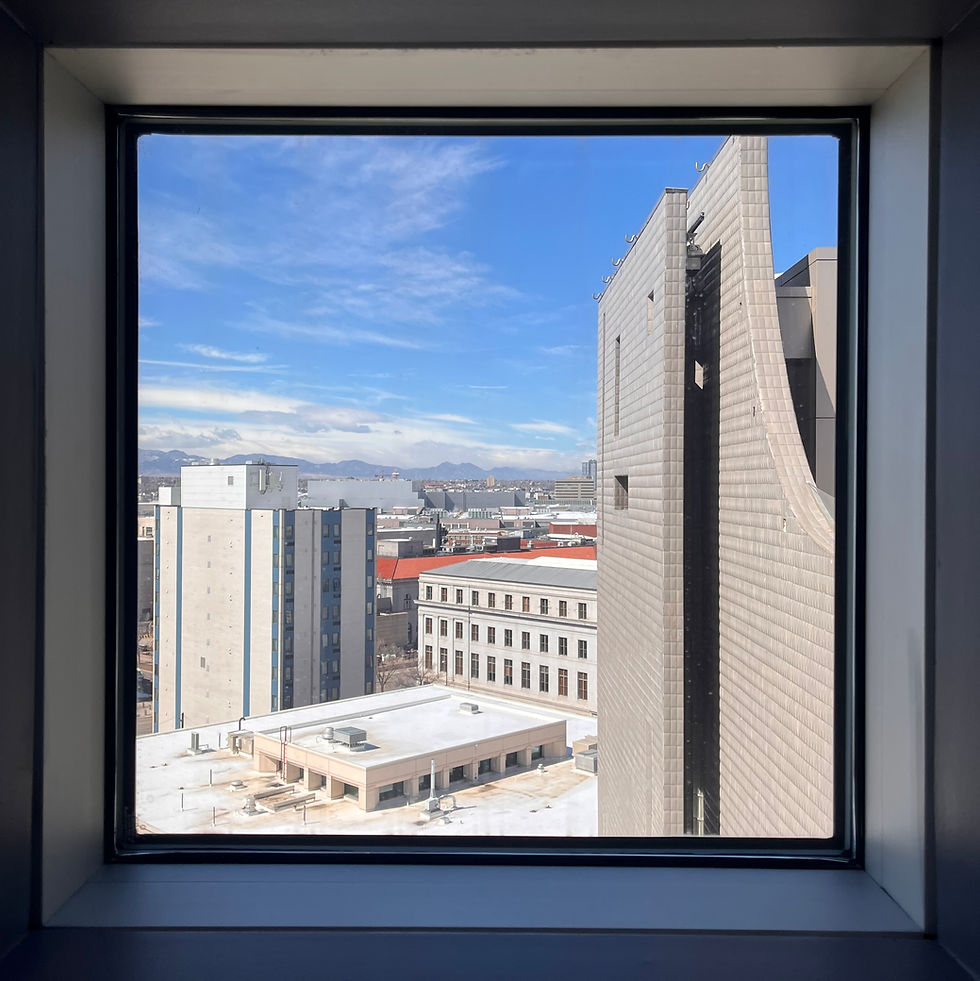
Denver's galleries and creative communities have a distinct energy, unhurried but deeply serious about art. The city sits at altitude and in mid-March the mountains were still wearing snow on their peaks. The Rockies were sharp in the distance throughout the week, a very clear view of mountains you don't find at sea level on the East Coast. Between the incredible natural scenery and the views of prints, it was a great trip. We were fortunate to encounter an exceptional concentration of print culture during our stay, with three visits standing out above the rest.
First Stop
Mo'Print Denver and the Futures: 528.0 Regional Juried Printmaking Exhibition
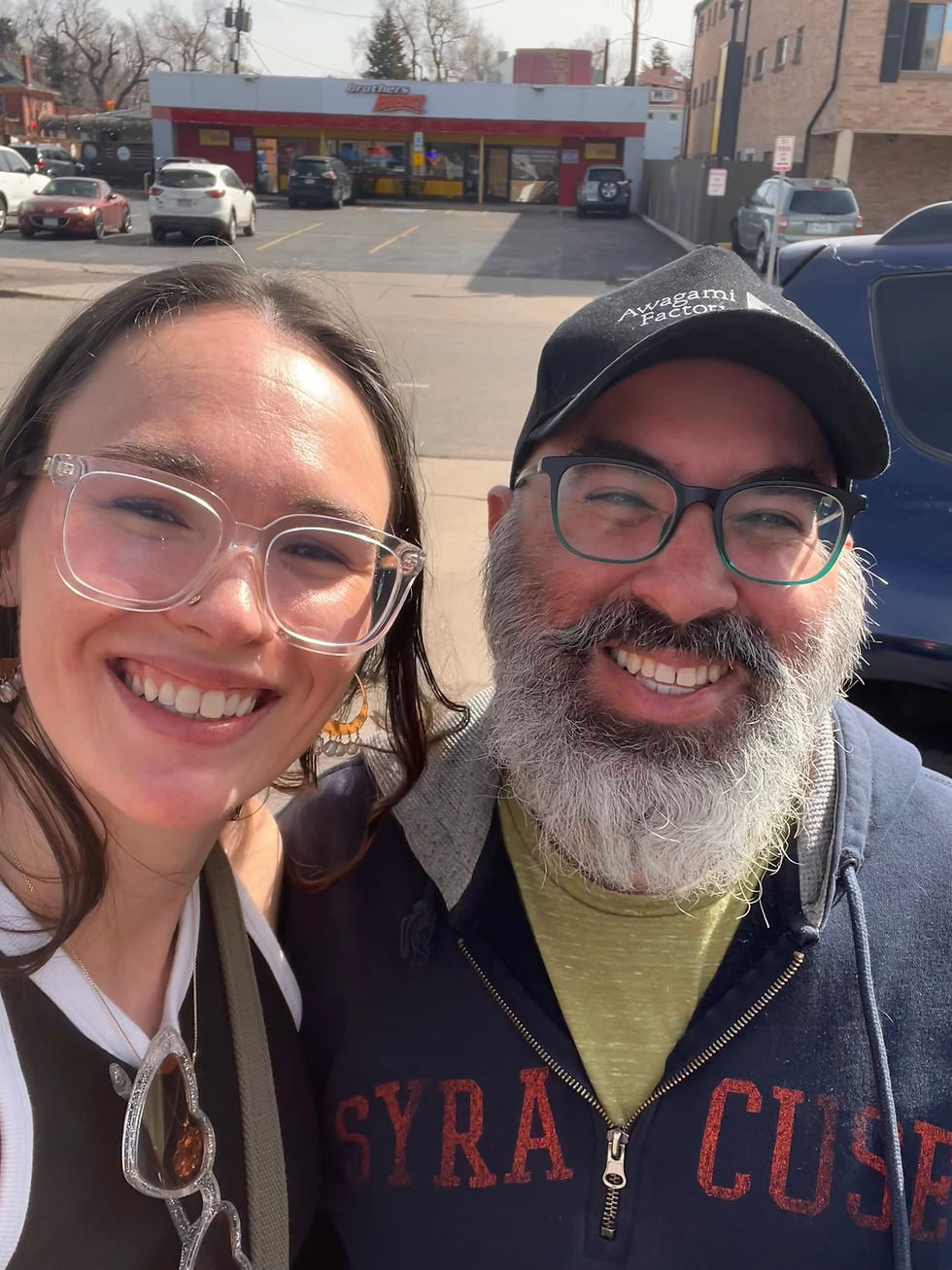
Mo'Print is a remarkable institution. A volunteer committee and city-wide celebration of original printmaking, it inspires, educates, and promotes awareness of the medium across the Denver metropolitan area, the Front Range, and throughout Colorado. We spent time with our good friend Gregory Santos of Mixed Grit, a printmaker who has called Denver home for over a decade now. He is the vice-president of Mo'Print and has been involved with the organization for many years, helping organize events, exhibitions and educational opportunities. We had many chats over good coffee from Pablo's Coffee (check their multiple locations out if you're in Denver) and drove around town checking out as many Mo'Print related exhibitions as we could.

The Futures exhibition at the Center for Visual Art, MSU Denver presented a variety of work that highlighted a vibrant printmaking community. "528.0" in the title of the show references Denver, the "mile-high city" and is also a requirement to be a part of the exhibition. Artists living within a 528 mile radius of Denver are eligible to enter their prints into the juried show. The artists included are relying on traditional printmaking methods but are continuously exploring new approaches and ways of creating. It was clear that Colorado has a strong print culture, and Mo'Print plays an important role in connecting these artists. This exhibition came down at the end of March 2026, but you can still check out all of the artists and prints included in the Futures exhibition guide.
A few highlights above from prints that stuck out during the visit. Artist, title and medium information can be found in the caption for each image on hover or click.
The community encountered through Futures and Mo'Print was open, generous, and eager to connect. That spirit of exchange is what makes a regional print scene truly alive, and Denver has it in abundance. A special thanks goes out to Gregory Santos and the good people at Mo'Print.
Second Stop
Xochimilco: Linocuts by Eduardo Robledo Romero
Denver Botanic Gardens

Visiting the Denver Botanic Gardens was a highlight of the trip. We went for the plants and greenhouses, but stayed for Xochimilco, the exhibition of works by Mexican artist Eduardo Robledo Romero, and the setting could not have felt more right. This show of mostly linocuts and a few screenprints was also a part of the many events related to Mo'Print 2026. The show has already ended, but you can explore some parts of the exhibition online and more of the artist's work through the links at the end of this section.

Robledo Romero's work draws on the imagery and spirit of Xochimilco, the famed chinampas or floating gardens of Mexico City. The prints are layered, alive with pattern and cultural symbolism, and grounded in a deep knowledge of the relief printing tradition. With an exteme attention to detail and incredible use of pattern Robledo Romero's prints offer a meditation on place, ecology, and memory that rewards slow looking.
A striking aspect of the exhibition was how naturally the work sat within the Botanic Gardens themselves. The surrounding greenery and the imagery on paper felt like they were speaking the same language: something about rootedness, about the relationship between people and their land. Art and nature in close dialogue. It's the kind of exhibition that changes the way you see both. Although this show is already down at this point, you can check out the links at the end of this section to get to know Robledo Romero and the work that was included.
One favorite, Ayudante (The Helper), though not the largest or most complex linocut in the show, was a sweet image with a meaning close to our hearts as dog lovers.

Third Stop
Southwest Impressions at the Denver Art Museum
Denver Art Museum

A visit to the Denver Art Museum to see Southwest Impressions was essential, and it did not disappoint. The exhibition, drawn from the Barbara J. Thompson Collection, brings together prints spanning roughly seventy years of artistic engagement with the American Southwest, from the arrival of the Atchison, Topeka and Santa Fe Railway in the 1880s through the New Deal era and beyond.
What makes the show so satisfying is how it organizes the work by process. Intaglio, lithography, block printing, and screen print sit alongside one another, allowing you to trace not just changing subjects but changing techniques and sensibilities across the decades. It is a show for anyone who cares about how prints are made, not just what they depict.
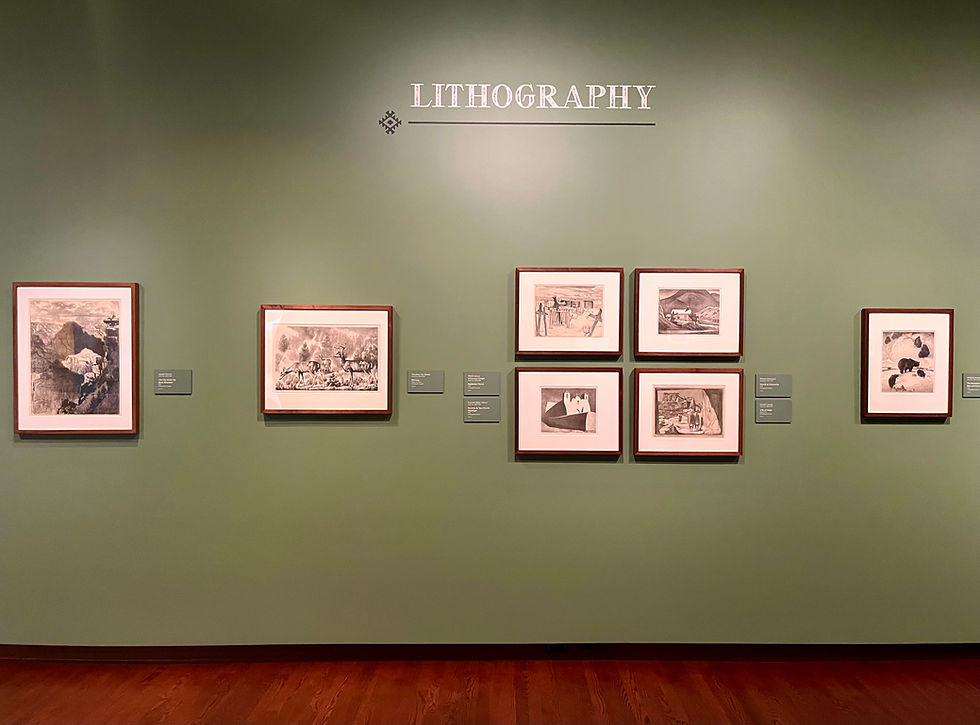
The New Deal section was particularly moving. Programs like the Graphics Arts Division of the Federal Arts Program kept printmakers working through the Depression, and the work from that period has a particular urgency and tenderness. The Southwest, it seems, served as both subject and solace.
Check out the exhbition in the Martin Building on Level 7 where you'll also get some great skyline views of Denver through the uniquely shaped windows on that floor or from the outdoor observation areas if they are open!
Southwest Impressions remains on view. If you are anywhere near Denver, go.
Denver gave us a lot to think about. The print community there is active, welcoming, and doing genuinely interesting work. We left with new connections, new ideas, and a clear sense that we will be back. Thank you to everyone who made time during the trip.


Comments